
UC Davis Tested: Why This Orange Grid Repels 90% of Mosquitoes (And Candles Don't)
You know the drill. It's a perfect summer evening. The grill is fired up, cold drinks are sweating on the patio table, and you've got friends coming over in twenty minutes. So you light those citronella candles you bought at the hardware store, feeling pretty good about your mosquito defense strategy.
Then the sun starts to set. And within an hour, everyone's slapping their ankles, retreating indoors, and wondering why those candles smell nice but don't seem to actually do anything.
Here's the thing: you're not imagining it. Those candles really aren't working that well. And now there's independent laboratory testing to prove it.
The Citronella Candle Problem Nobody Talks About
Let's be honest: citronella candles have been the go-to backyard mosquito solution for decades. They're cheap, they're everywhere, and they smell like summer. But have you ever stopped to wonder if they actually repel mosquitoes, or if we've all just collectively agreed to pretend they do?
The reality is that most citronella candles provide minimal protection. The active compounds dissipate quickly into the air, the effective range is extremely limited, and unless you're practically sitting on top of the flame, mosquitoes barely notice them.
But don't take my word for it. Let's look at what happens when you put area repellents to the test in a controlled laboratory setting.
What Happened When Scientists Actually Tested Area Repellents
Carroll-Loye Biological Research, an independent laboratory affiliated with UC Davis, conducted rigorous testing on different area repellent technologies. Their goal was simple: measure actual mosquito repellency rates under controlled conditions.
The test subjects? Aedes aegypti mosquitoes: also known as yellow fever mosquitoes. These aren't your lazy, casual backyard biters. Aedes aegypti are considered among the most aggressive mosquito species on the planet. They're persistent, they're hungry, and they don't give up easily.
The Aedes aegypti mosquito transmits serious viral diseases like Dengue, Zika, Chikungunya, and Yellow Fever.
In other words, if something works against these mosquitoes, it's going to work against the ones ruining your barbecue.
The testing protocol measured repellency at different distances and over extended time periods. And the results were eye-opening.
The Numbers That Changed Everything
Here's what the UC Davis-affiliated laboratory testing revealed about the Bug Bam Mosquito Grid:
Close-range protection (1 foot from the grid): 90% repellency
That means nine out of ten aggressive mosquitoes were deterred from the protected area. Not confused. Not mildly inconvenienced. Actually repelled.
Mid-range protection (10 feet from the grid): 86% repellency
Even at the margins of the protected zone, the grid maintained impressive effectiveness. Most people don't realize how quickly typical area repellents lose their punch as you move away from the source.
Overall area protection (300 square feet): 70-90% repellency
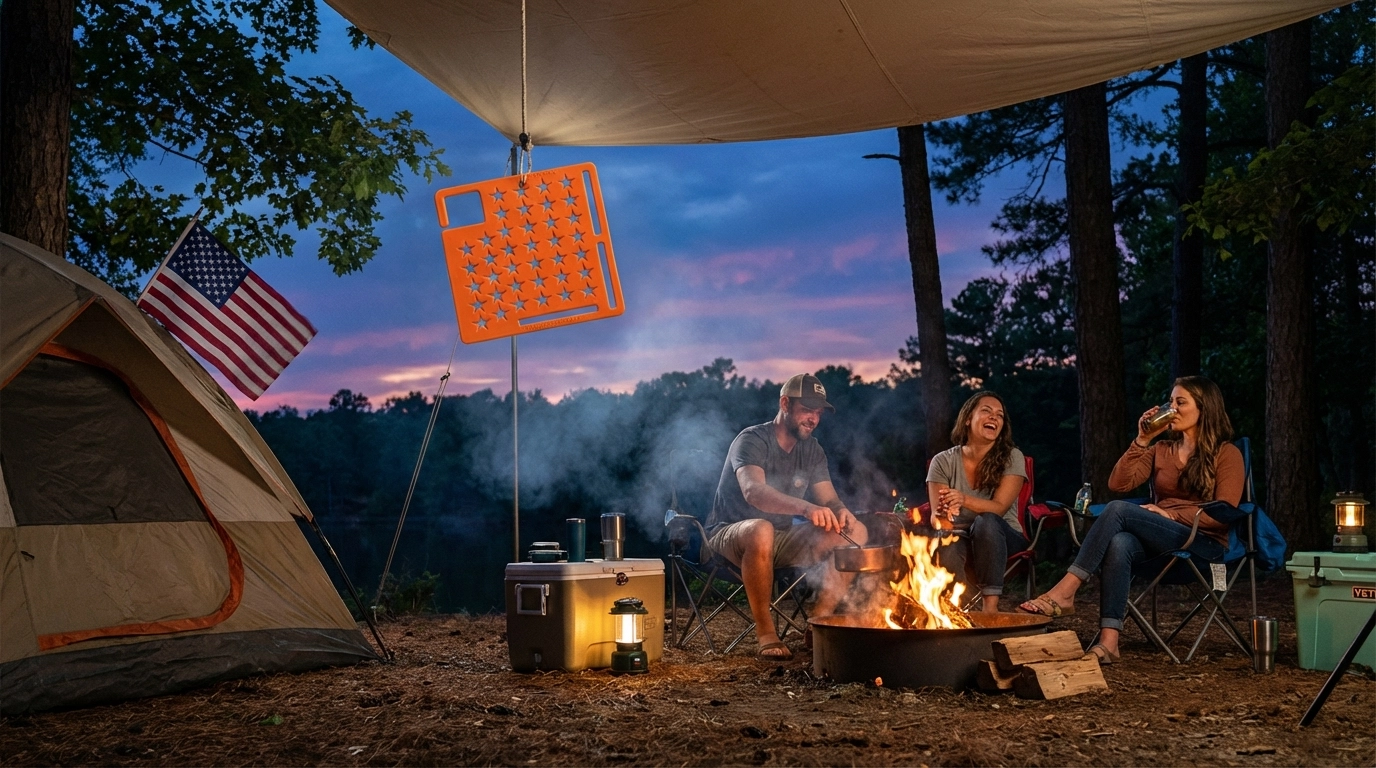
This covers a realistic outdoor space: think a patio, a campsite, or a backyard dining area.

Duration: 100+ hours of effectiveness
Here's where it gets interesting. The laboratory tested the grid even after it had been opened and exposed to air for 100 hours. It still performed. That's not a typo: one hundred hours of continuous use, and the repellent matrix was still doing its job.
Compare that to a citronella candle that burns down in a few hours and provides questionable protection even while it's lit.
Reality check: no natural repellent offers 100% efficacy. In our category, we haven't seen any other natural area repellent offer such an extended efficacy time—the Mosquito Grid stands out as a plant-based option you can actually rely on.
Why the Orange Grid Works Differently
So what makes this particular technology outperform traditional area repellents so dramatically?
The Bug Bam Mosquito Grid uses a time-released matrix infused with natural geraniol. If you've never heard of geraniol as a mosquito repellent, you're not alone: citronella gets all the marketing attention. But geraniol has been shown in multiple studies to be highly effective at deterring mosquitoes.
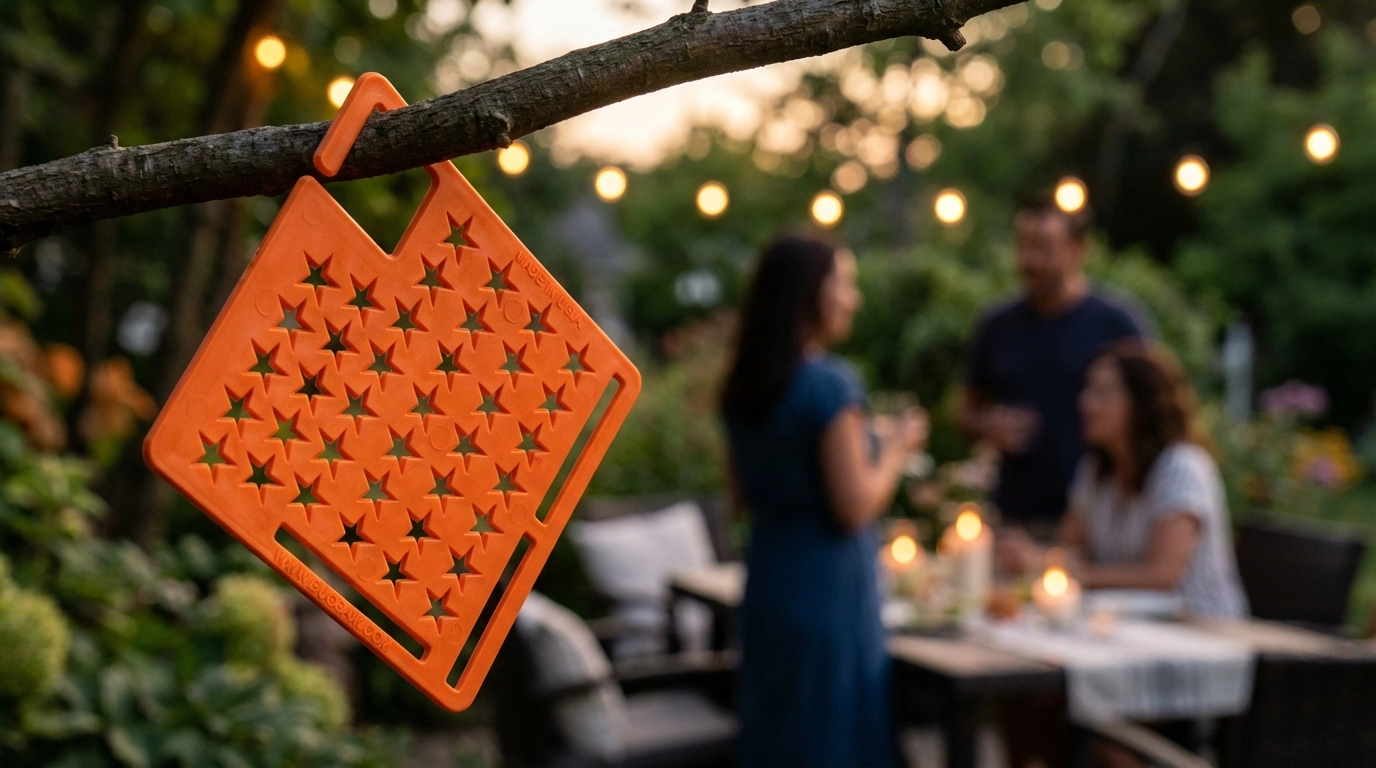
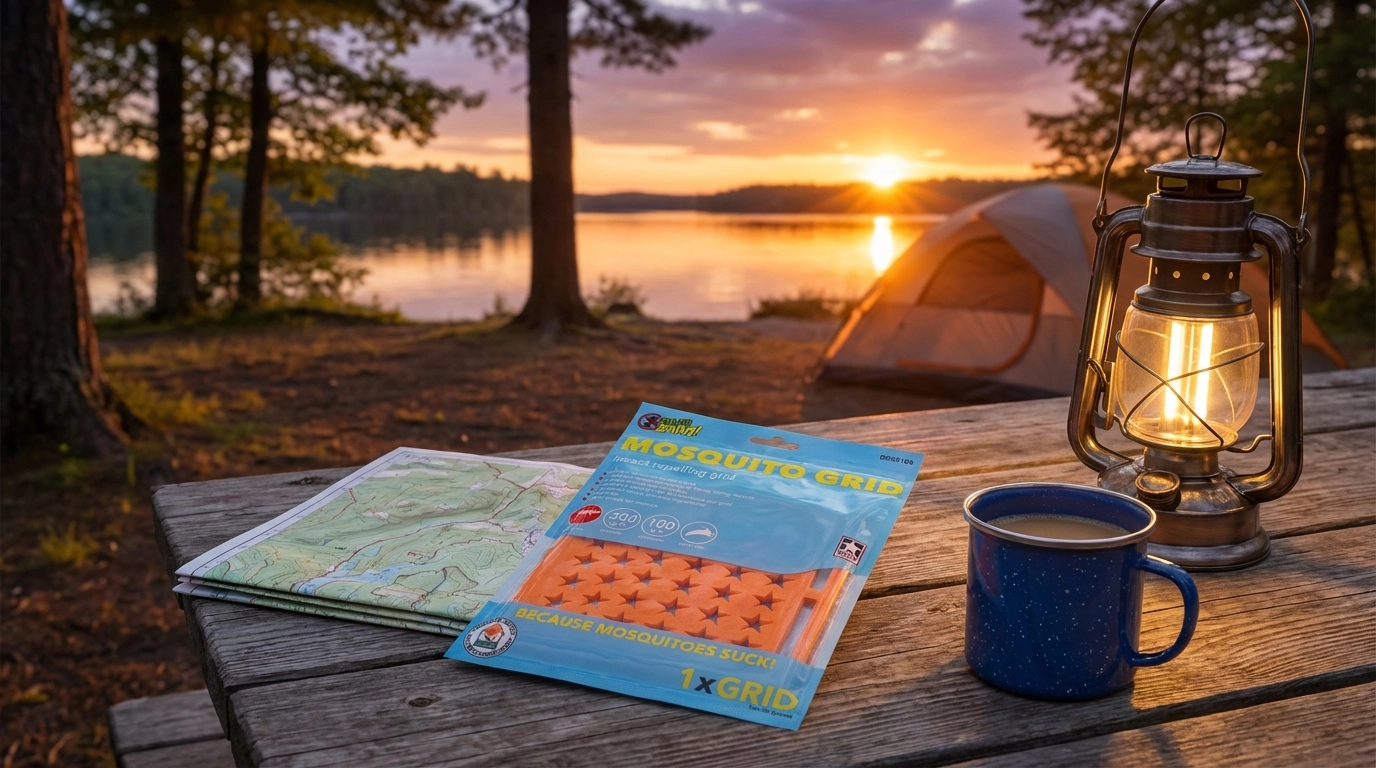
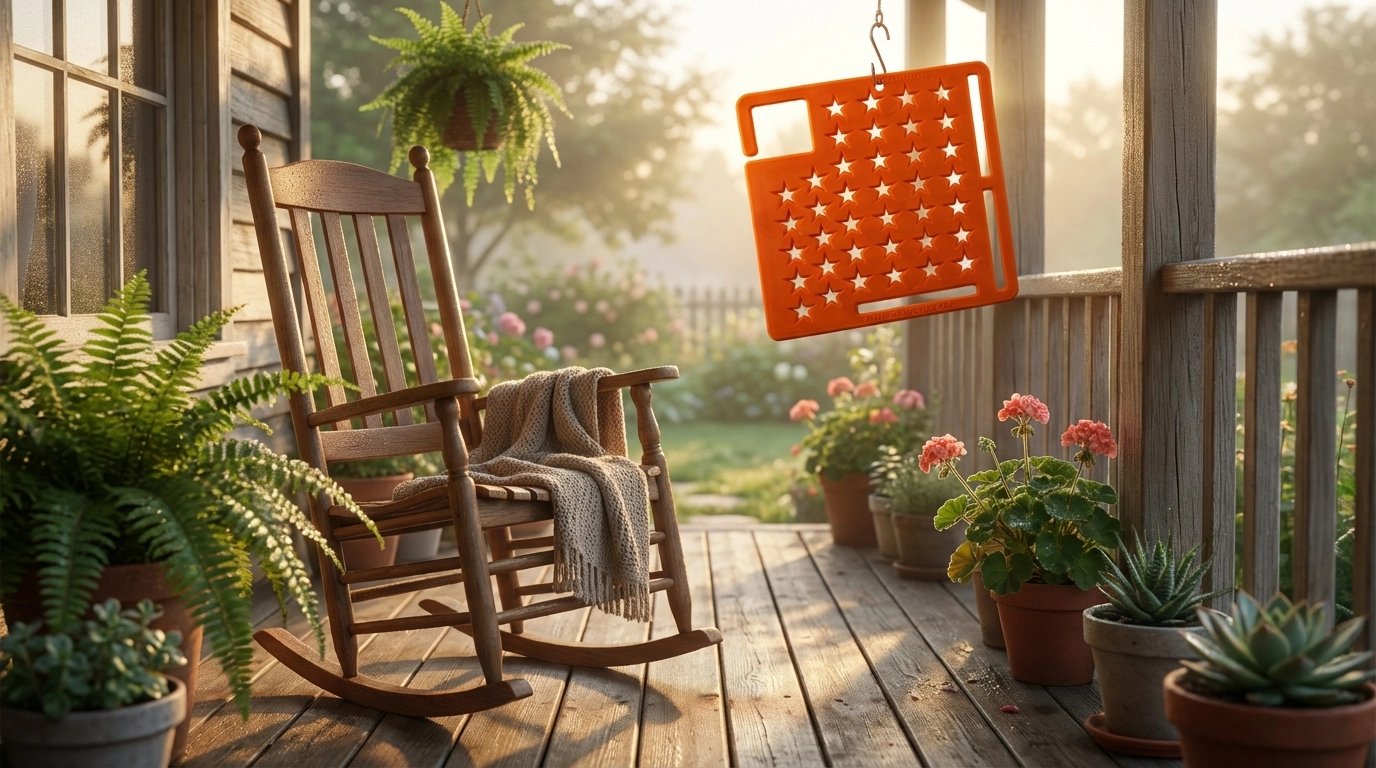
The grid itself is that distinctive orange color with star-shaped holes punched throughout. Those holes aren't just for aesthetics: they increase the surface area, allowing the geraniol to release steadily into the surrounding air over an extended period.
Unlike a candle that burns hot and fast (releasing most of its active ingredients in a short burst before they dissipate), the time-released matrix provides consistent, steady protection. Think of it like the difference between dumping a whole salt shaker on your food versus seasoning it properly throughout cooking.
The result is a protective zone that actually maintains its effectiveness over time, rather than fading after the first hour.
What This Means for Your Backyard (Or Campsite, Or Porch)
Let's bring this back to real life. What do these laboratory numbers actually mean when you're trying to enjoy an evening outside?
You can set it and forget it. With 100+ hours of effectiveness, you're not constantly relighting, replacing, or repositioning. One grid covers you for multiple evenings of outdoor time.
You get actual coverage. A 300-square-foot protection zone means your whole seating area can be covered, not just the six-inch radius around a candle flame.
It works against the tough ones. If the grid repels 90% of Aedes aegypti: one of the most aggressive species tested: it's going to handle the mosquitoes in your neighborhood.
No flames, no smoke, no mess. The grid just hangs there doing its job. No fire hazard, no ash, no waxy residue on your patio furniture.
The Science of Spatial Repellency
There's a term researchers use for this type of protection: spatial repellency. It's different from the repellents you apply to your skin, which create a personal barrier. Spatial repellents work by treating an area, creating a zone that mosquitoes prefer to avoid.
The advantage of spatial repellency is that it protects everyone in the area without requiring individual application. Kids who forgot to put on repellent, guests who show up unexpectedly, that one friend who insists they "don't need it" and then complains all night about bites: everyone benefits from the protected zone.
The challenge with spatial repellency has always been maintaining consistent coverage over time and distance. That's exactly what the UC Davis-affiliated testing measured, and exactly where the time-released geraniol matrix excelled.
Practical Tips for Maximum Protection
Based on the laboratory data, here are some ways to get the most out of spatial area repellents:
Position matters. Place your grid upwind if there's a breeze, or centrally located if the air is still. This helps distribute the active compounds throughout your space.
Combine approaches when needed. For high-pressure mosquito situations (think lakeside at dusk), consider using an area repellent alongside personal protection like a Bug Bam roll-on for extra coverage.
Think about your specific space. A 300-square-foot zone works great for a patio or defined seating area. For larger spaces, you might need multiple grids or strategic placement near where people actually gather.
Replace when needed. Even with 100-hour effectiveness, eventually the matrix will be depleted. Keep track of your usage so you're not caught unprepared.
The Bottom Line on Laboratory-Tested Protection
Here's what it comes down to: when an independent laboratory puts area repellents to the test against aggressive mosquitoes, the differences become clear. Some products provide more ambiance than protection. Others deliver measurable, documented results.
The UC Davis-affiliated testing showed that 70-90% repellency is achievable with the right technology. That's not marketing speak: that's laboratory data collected under controlled conditions with some of the most aggressive mosquitoes scientists work with.
If you're looking for a natural solution, the Bug Bam Mosquito Grid is about as close as it gets.
Next time you're setting up for an evening outside, you have a choice. You can light another citronella candle and hope for the best. Or you can hang an orange grid with star-shaped holes and let the science do the work.
Your ankles will thank you.
*Bug Bam Products does not promote nor guarantee their products will prevent or cure any disease.